
What is a waterstop centering element?
Definition, function and distinction: how a waterstop centering element holds a metal waterstop centrally in the construction joint between base slab and wall.
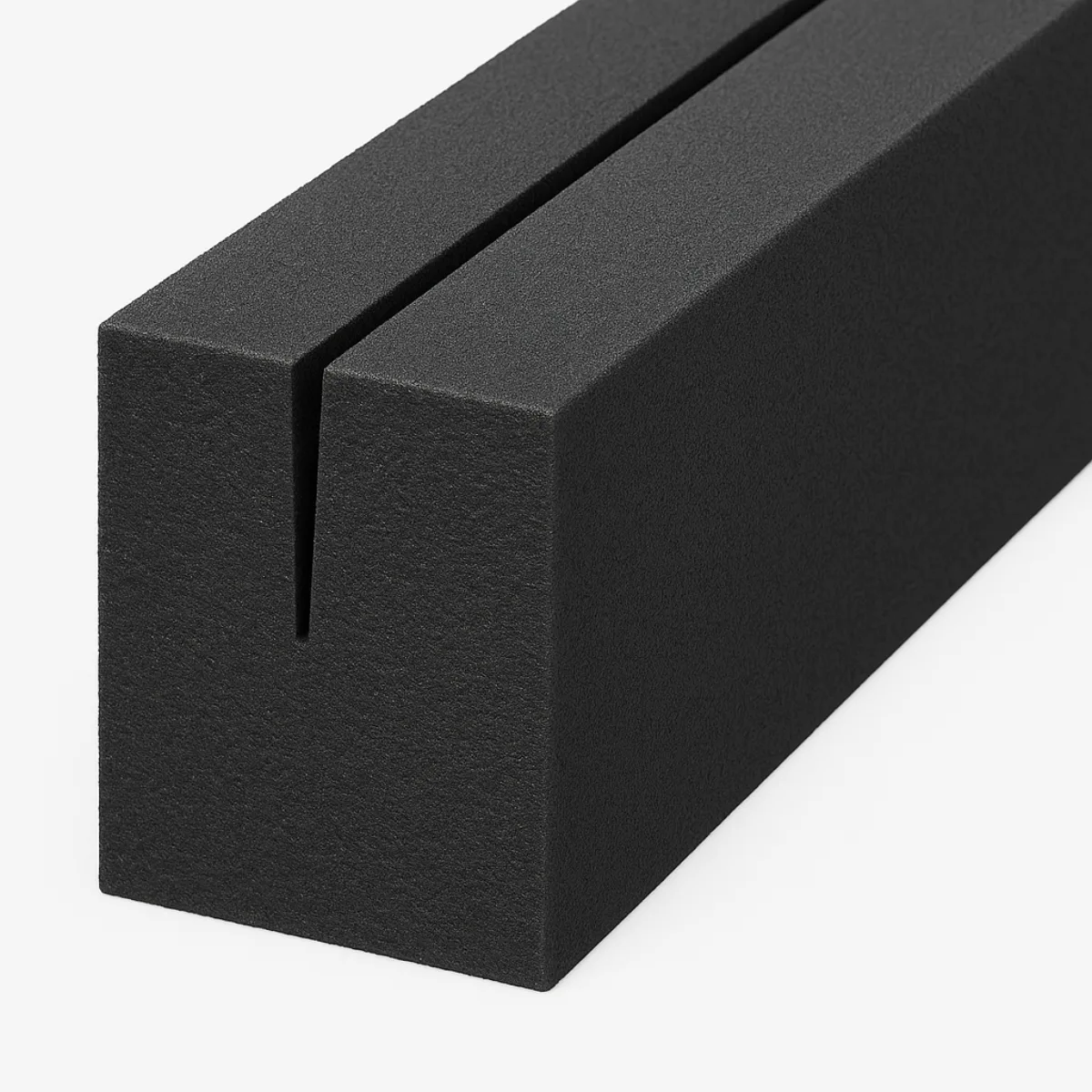
A waterstop centering element is a formed element that holds a metal waterstop (steel waterstop sheet) in the middle of the construction joint between base slab and wall, including during the pour. It sets the geometry, meaning the central position and the clearance to the reinforcement. And it holds the sheet against shifting and tipping. It does not replace the tie wire at the base of the waterstop. That fixing remains part of the installation.
In a watertight concrete structure (known in Germany as Weiße Wanne, ‘white tank’), the construction joint between base slab and wall is the weak point that shows up again and again. Whether it stays watertight depends partly on where the waterstop sits. On site, that position is often left to the eye. It should be set by the geometry of a formed element instead.
This article is written by Dr.-Ing. Jörn Budde, expert for building waterproofing (Sachverständiger für Bauwerksabdichtung) and developer of the FBZ, who came to the subject through his work on expert reports. More about him on the About page.
What is a waterstop centering element for?
It puts the waterstop where it belongs: in the middle of the future wall, with enough clearance to the wall reinforcement on both sides. And it keeps it in that position during the pour.
The position matters because metal waterstops seal by the embedment principle. The sheet or its coating bonds with the surrounding concrete, and that only works if the concrete encases the sheet fully and densely on both sides. At the joint between base slab and wall, water pressing against the structure meets the construction, so this is where the position of the waterstop helps decide water tightness. A sheet that sits centrally, with sufficient concrete cover on both sides, meets important conditions for sealing. If it sits off-center or touches the reinforcement, that bond is missing on one side.
On site, the position is often set by hand. The sheet is aligned by eye, fixed somehow with tie wire or other aids, and then everyone hopes the internal vibrator (poker vibrator) does not shift it. Or damage it. A centering element sets this step by design instead of leaving it to judgment by eye.
What happens without centering?
Without a geometric guide, the position of the waterstop depends on care, time pressure and the position of the reinforcement. The result is often a shifted, tilted or only partly embedded sheet. Once the concrete is in, none of this can be corrected.
Building-defect assessment practice shows five typical sources of error:
- Displacement during the pour: The fixing does not withstand concrete pressure or the vibrator.
- Clearance error to the reinforcement: The sheet touches a reinforcing bar, and the concrete cannot fully flow around it.
- Poor centering: The sheet does not sit centrally, and the required minimum clearances are not kept on both sides.
- Wrong embedment depth: The sheet sits too shallow or too deep in the base slab.
- Damaged coating: The coating is damaged during handling or vibration.
All five appear frequently in expert reports. They rarely come from ignorance and mostly from improvisation. The sheet stands freely between the vertical reinforcing bars of the wall, is tied only at points, or is pressed into the fresh concrete afterwards. The Zement-Merkblatt B22 „Arbeitsfugen“ (construction joints), a technical bulletin of the German cement industry, is clear on this. Metal waterstops are to be installed before concreting and secured against tipping over. Pressing them into the fresh concrete afterwards is to be rejected.
How does centering differ from fixing brackets and tie wire?
Fixing brackets, fixing angles and tie wire fasten the waterstop to the reinforcement. A centering element also sets the position: the middle of the wall and the clearance to both layers of reinforcement.
The difference is the reference point. Brackets and wire fix the sheet relative to the reinforcement. If the reinforcement is out of place, the sheet moves with it during the pour. Factory-fitted mounting feet make fixing easier, but they only help when they are tied completely and correctly. A centering element is pushed onto the waterstop from above and guides it in a slot, so the central position follows from the geometry of the formed element.
Inspection before the pour stays mandatory. Site management or another inspection body still checks position, laps and coating. Centering sets the position. It does not replace that check.
How does a waterstop centering element work?
The formed element is pushed from above onto the protruding part of the waterstop. Its central receiving slot takes up the sheet and guides it to the middle of the wall. Stops keep the clearance to the reinforcement on both sides. During the pour, the form fit holds the sheet in position against concrete pressure and the vibrator.
There are no moving parts, and you need no special tools. The formed element is not cast in and does not bond with the concrete. It is removed after the concrete has hardened. Because the sheet is guided in the slot, its coating is also protected against damage during handling.
Which structures is it relevant for?
Wherever a metal waterstop is cast into a construction joint. The typical case is a watertight concrete structure sealed via the construction joint between base slab and wall: basements, underground parking garages, underpasses, industrial buildings exposed to groundwater.
The main area of use is the horizontal construction joint between base slab and wall. A centering element fits common coated and uncoated metal waterstops as used in watertight concrete structures. For corners, T-junctions and transitions, the specifications of the respective metal waterstop manufacturer still apply.
The FBZ Fugenblechzentrierung
The FBZ Fugenblechzentrierung, FBZ for short, turns this principle into a product. It is a formed element made of PE foam in several size variants for different wall cross-sections. It is pushed from above onto the waterstop and pulled off again after the concrete has hardened. The patent is pending (DE 10 2025 121 129.9).
Jörn Budde developed the FBZ because his expert reports kept bringing him back to the same spot and the same errors.
Installation follows three steps:
- Place: position the waterstop and fix it to the reinforcement as usual
- Insert: push the FBZ from above onto the protruding part of the waterstop; the slot guides the sheet to the center
- Pour: place the concrete; the FBZ holds the sheet in position
The FBZ fits common coated and uncoated metal waterstops for the joint between base slab and wall. The supplier is BBA GmbH in Bad Saarow, Germany. More about the product on the homepage.
Frequently asked questions
Does a waterstop centering element replace the tie wire?
No. The waterstop is first fixed to the reinforcement as usual via its existing fixing points; the centering element does not replace this fixing. It centers the sheet and holds it in position.
Does the formed element stay in the structure?
No. It is not cast in and has no bond with the concrete. It is removed after the concrete has hardened.
Does centering make the joint watertight?
No. The waterstop, the concrete and careful workmanship make the construction joint watertight. Centering reduces one common source of error by design: the wrong position of the sheet.
Are special tools needed?
No. You fix the waterstop as usual, then push the formed element onto the sheet by hand, piece by piece.
Is “Fugenblechzentrierung” (waterstop centering) a standardized term?
No. The term refers to formed elements that set the position of the waterstop in the construction joint geometrically. The technical requirements behind it are laid down in the German technical bulletins and codes of practice on construction joints and coated metal waterstop systems: installation before concreting, securing against shifting and tipping over, complete embedment in the concrete.
- Zement-Merkblatt B22 „Arbeitsfugen“ (construction joints), technical bulletin of the German cement industry (BDZ), 2002 edition, in German
- Zement-Merkblatt H11 „Fugen und ihre Abdichtung in WU-Bauwerken aus Beton“ (joints and their sealing in watertight concrete structures), technical bulletin, InformationsZentrum Beton, edition 5.2016, today VDZ, in German
- DBV-Merkblatt „Beschichtete Fugenblechsysteme“ (DBV Code of Practice: coated metal waterstop systems), German Society for Concrete and Construction Technology (DBV), March 2023 version, paid, in German
- BauNetz Wissen: Fugenbleche (metal waterstops), in German